Water Is a Creative Bastard
Notes from my efforts to keep Lake Washington on the outside of things.
There is a category of engineering problem where the adversary is patient, has no schedule, no budget, and no other obligations. Waterproofing is that category. Every seating surface on a housing is a door, and water spends the entire dive quietly checking whether you remembered to lock it.
I’ve come to think of water as an inquisitive two-year-old. It isn’t malicious. It has no plan. It’s just crawling around the whole assembly, tirelessly, finding the one thing you forgot to clean perfectly, and then putting it in its mouth. You cannot outsmart a two-year-old. You can only make the house safer and accept that the crayon is going on the wall somewhere.
Act I: The Commercial-Off-The-Shelf Era
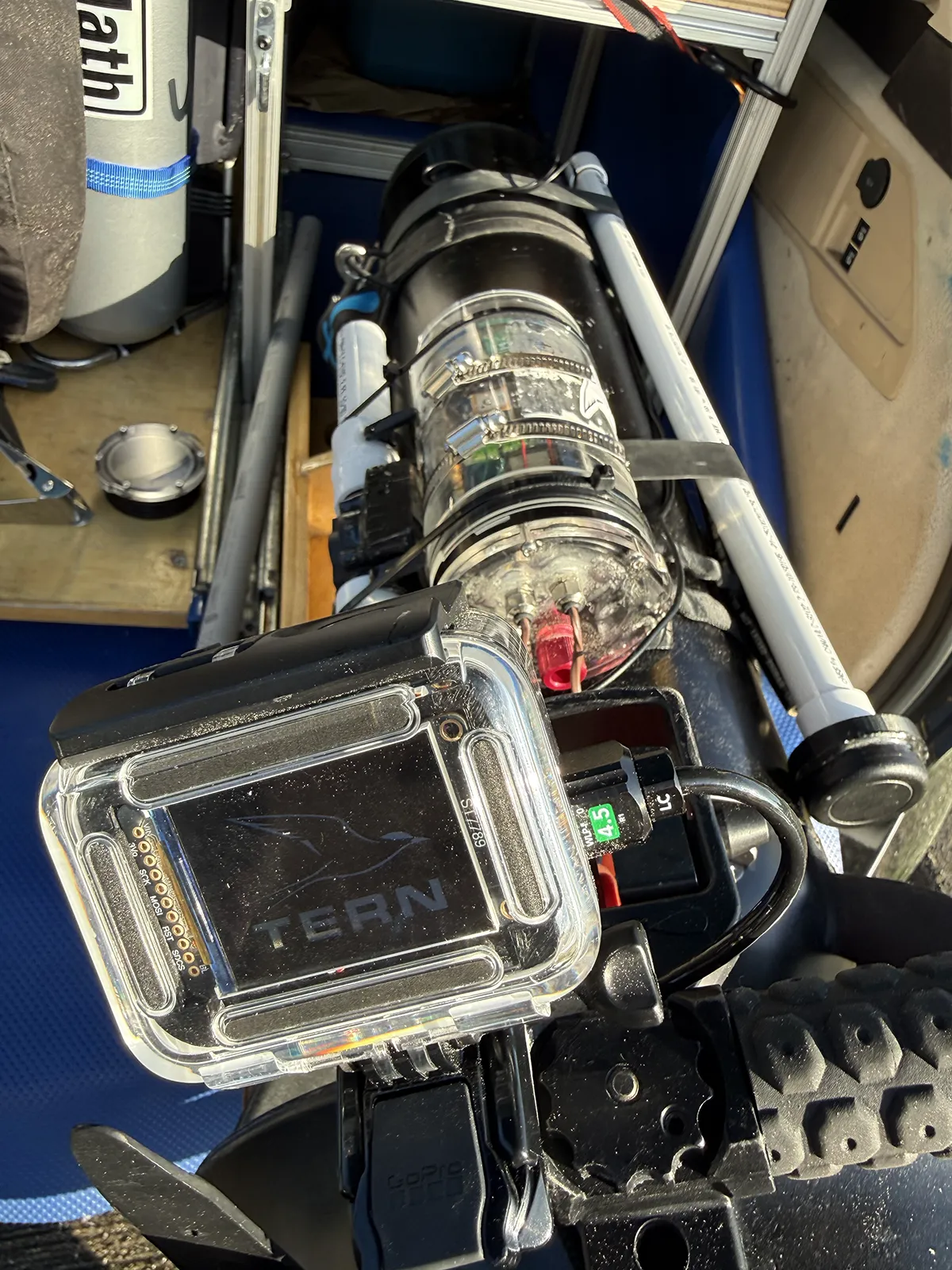
I started where most people start, with DIY housings from BlueRobotics and repurposed GoPro housings. This is a good place to start. The tubes come in useful sizes, the endcaps are already machined for penetrators, the geometry is solved, and you can spend your attention on the thing you’re actually building instead of on cylinder wall thickness.
My first glands were standard electrical cable glands from the general industrial supply world. They worked. They worked in the specific sense that, with enough epoxy, almost anything works. “Enough epoxy” is doing a lot of load-bearing here, both structurally and rhetorically.
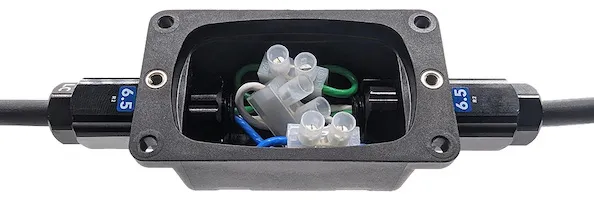
Then I switched to BlueRobotics penetrators and their pressure-rated cable, and it was a revelation. Things stopped leaking. I stopped thinking about glands entirely, which is the highest compliment you can pay a part.
They are also stupid-expensive. Thirteen dollars a penetrator is fine when you have two. It is a materially different conversation when a build has a dozen of them, plus spares, plus the ones you’ll ruin learning. So the next build is going back to generic electrical glands at around three dollars, and I’m going to figure out how to make them work. That’s not nostalgia for the bad old days; it’s arithmetic.
Act II: Everything Leaks, Eventually, Including the Things That Never Have
Here is the rule I wish someone had handed me on day one: a seal that has never leaked has not demonstrated that it does not leak. It has demonstrated that it has not leaked yet. This is classic Nassim Taleb Black Swan territory. Every dive that it doesn’t leak feels like evidence that it won’t leak, when in reality, it’s just one dive closer to catastrophic failure.
Glands leak. Housing seals leak. Housing seals with a perfect service record leak, for reasons that will never be fully explained, and you will spend the drive home constructing a theory about it.
The part that genuinely surprised me was the coupling. If you use general-purpose cable instead of pressure-rated cable, a leak in one housing does not stay in that housing. Stranded conductor is a bundle of capillaries with a plastic jacket around it. Give water a pressure differential and a few hours and it will migrate down the cable core and arrive, politely, inside a second housing that was sealed perfectly the entire time. You then spend an afternoon looking for leaks in a housing that was never the problem.
That’s the argument for pressure-rated cable in one sentence: it isn’t about the cable surviving. It’s about the cable not causing a cascading failure.
Act III: The Nuclear Option
Where I can, I just pot the whole thing.
A fully potted junction is very unlikely to leak, because there is no volume left for water to occupy and nothing for it to sneak past. It is the most reliable answer I have found.
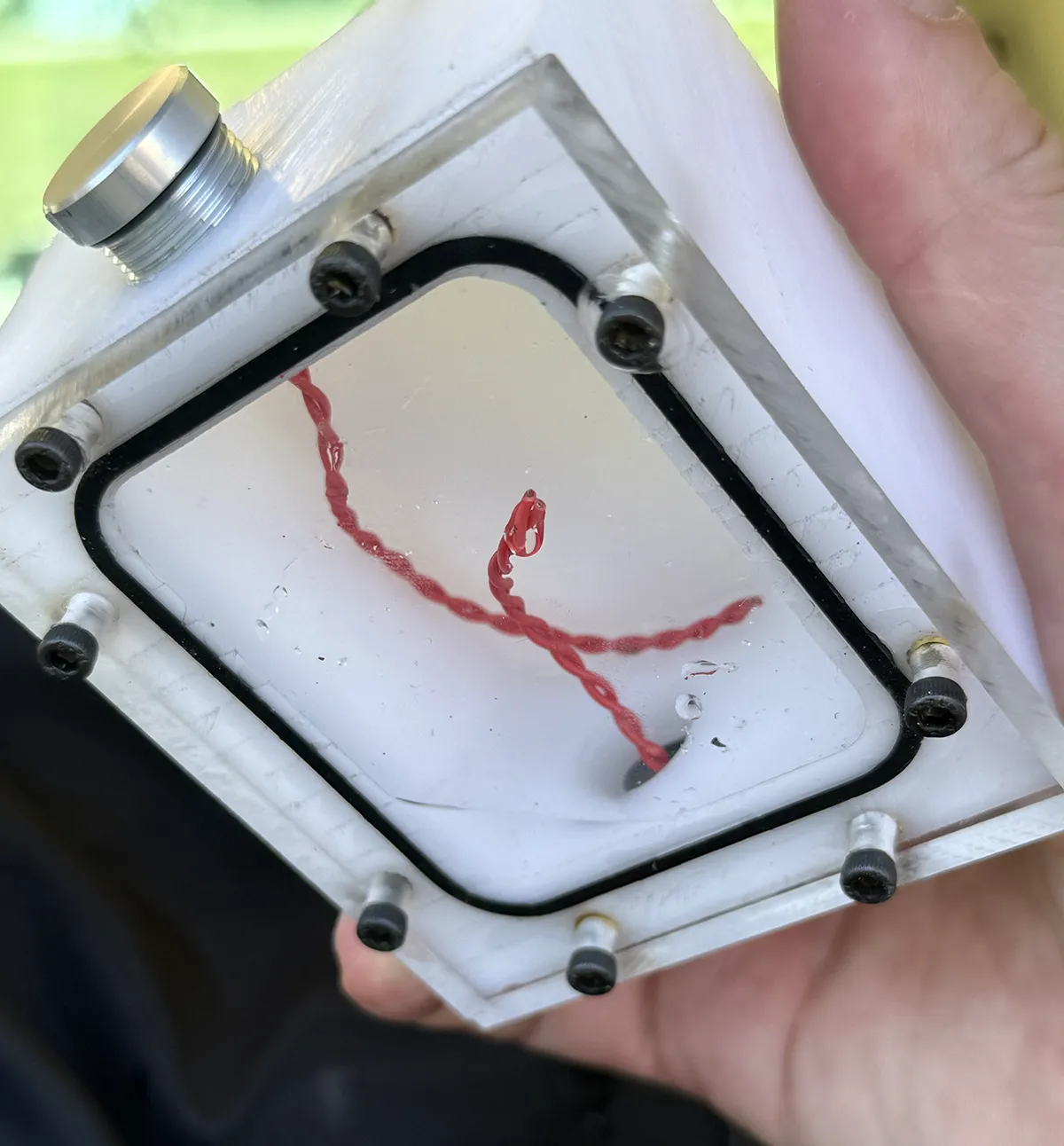
It is also a hassle. It’s a lot of epoxy. Sometimes it needs a custom-shaped mold just to hold the pour, which means you’re now doing a small fabrication project in service of avoiding a different fabrication project. And potting has its own failure modes that only show up later: epoxy bonds beautifully to some surfaces and not at all to some others, so you can end up with a lovely solid block with a microscopic annular gap around the one cable that mattered. To make things better, you can make gaps bigger by thermal or pressure cycling.
The real cost, though, is that a potted assembly is a permanent assembly. You have traded serviceability for reliability, in full, with no refunds. That’s an acceptable trade for a junction you never intend to open. It is a terrible trade for anything you’re still iterating on, which, in a project like this, is most things.
Act IV: One Grain of Sand
Every seating surface is an opportunity. A product like this is basically nothing more than a bunch of electronics hiding behind a pile of seating surfaces.
The thing that will actually end your dive is not a design flaw. It’s a single grain of sand on an O-ring face. An O-ring seals by being compressed into a controlled deformation; one hard particle locally defeats that compression and creates a channel that scales with depth. A few hundred dollars of hardware, undone by a contaminant smaller than the tolerance you agonized over in CAD.
The current practice is to clean every seating surface every dive, no exceptions. “I’ve never seen one of those leak” is an excellent reason to open it up, wipe it down, apply some lubricant, and check the torque. A dive costs me a whole day to do; spending an extra half an hour reducing the risk of leaks is worthwhile insurance.
The other useful note is that a lot of leaks are slow. Sometimes you get flooding (definition: so much water coming in you fear for your life), and sometimes you get a leak (definition: water inside, but manageable). Those little desiccant packs that you’ve probably been throwing away are shockingly absorbative, and if you have space in the housing, can keep water off the electronics for a moment longer - perhaps long enough to finish the dive, even.
Act V: Salt, Fresh, and Valhalla
Saltwater and electronics mix so poorly as to be effectively unrecoverable. A saltwater flood is not a repair; it’s a post-mortem. The conductivity gets you immediately and the galvanic corrosion gets whatever survived. Anything with power applied (which is everything) dies, and it’s not slow.
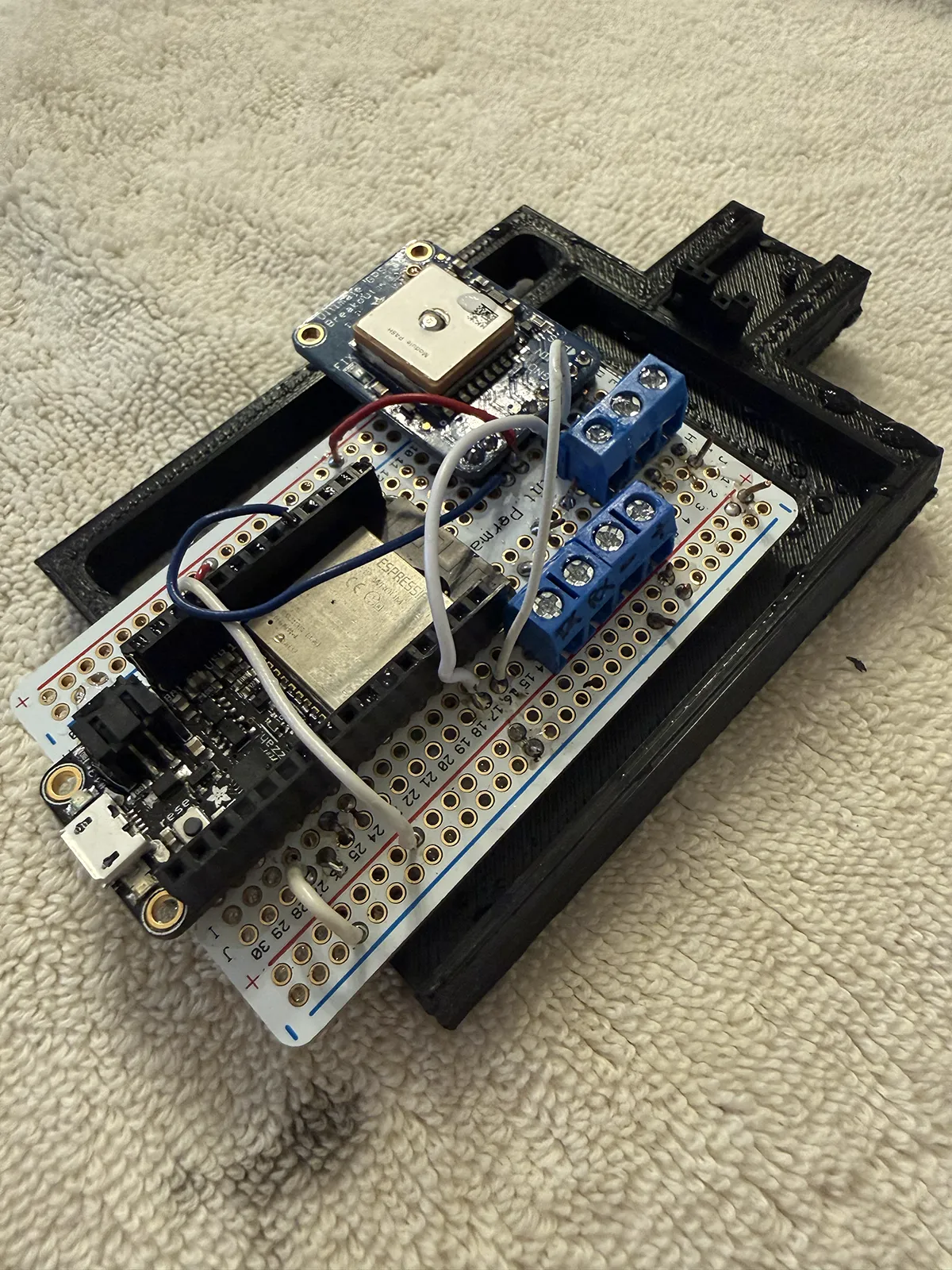
Freshwater is more generous. A freshwater flood usually just ends that dive. Tern DPV-Nav is dead for the day, sure, but after a brief respite in the Halls of Odin, drinking mead and singing Nordic fight songs, it’s back in the game the following weekend. Pull power, rinse in distilled water, dry it out properly, and there’s a real chance you’re diving the same board next week.
Lake Washington is, in this one specific regard, a merciful place to make mistakes.
Act VI: Milling My Way Out
The current direction is milled housings, mostly Delrin.
The economics are hard to argue with. A GoPro housing for the display module is about $60. The Delrin for a milled display housing is a few dollars. A BlueRobotics housing — even just the 2in version — is well over $100. Multiply by iterations, because there will be iterations.
It also solves a design problem rather than just a cost problem. The GoPro housing forces me into GoPro-style mechanical buttons, which are, charitably, difficult to align internal buttons with. Milling my own housing lets me move to piezo buttons in the Shearwater Perdix style, where the pressure boundary has no moving parts in it at all and I’m not trying to 3D print a frame for buttons. That’s a whole post on its own.
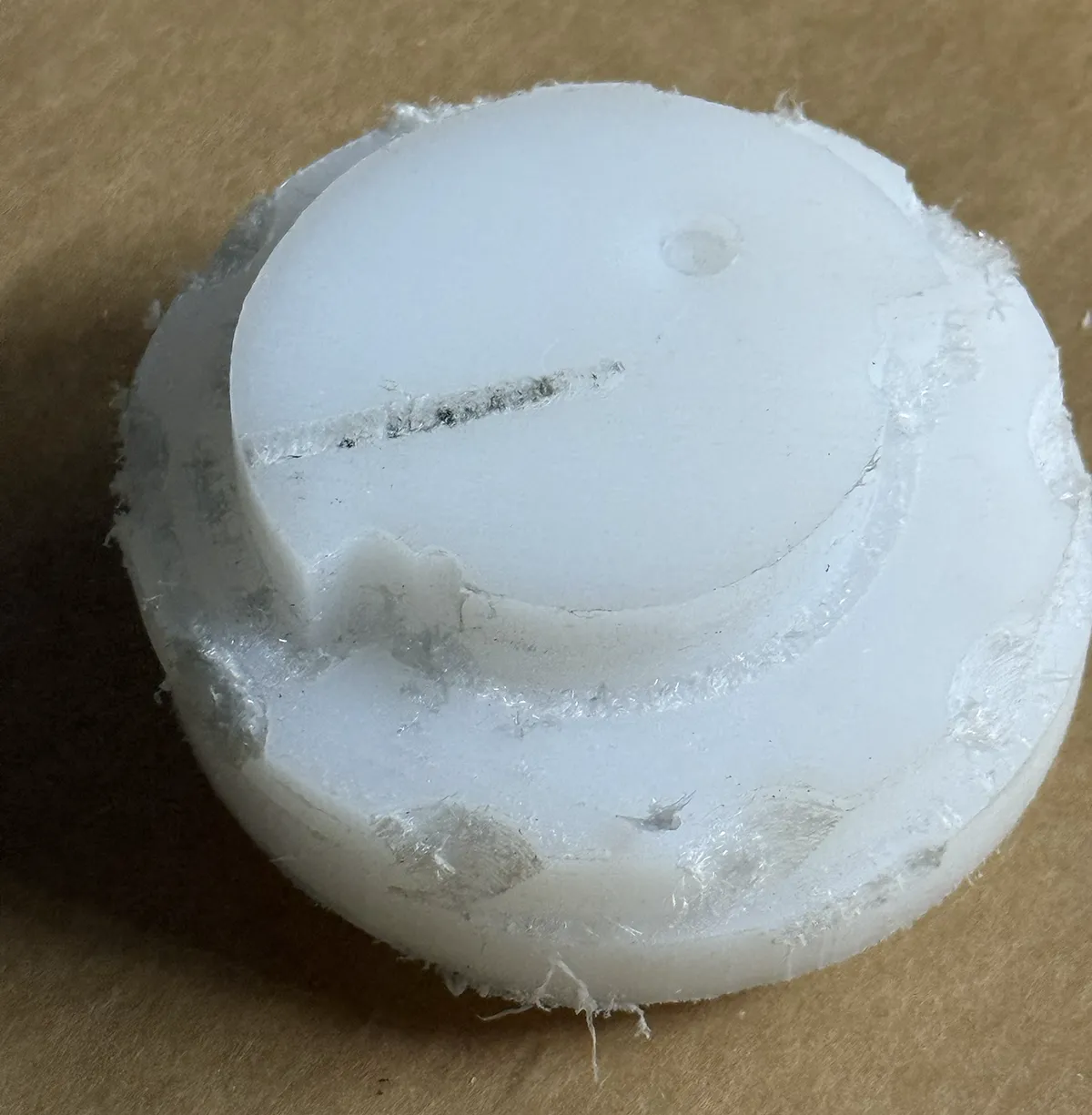
What nobody mentions is that milling Delrin, while theoretically trivial, has been an interesting challenge. My mill is an older belt-drive Shapeoko, and I am learning to use it while building it while using it while learning to use it. Delrin is happy to be cut into beautiful shapes and equally happy to be cut into grotesque random shapes. Also a future post.
What I’d Tell Past Me
- Seals are consumables. Budget for them, in dollars and in prep time.
- Pressure-rated cable isn’t about the cable. It’s about not connecting your failures together.
- Pot it once it’s boring.
- A grain of sand outranks your CAD tolerances; detail oriented prep is worth the extra time.
- Assume water gets in. Where possible, design so that a little water doesn’t ruin your day.
Prepping better and accepting the occasional failures were the shifts that changed things. I stopped designing to keep water out — that’s unachievable, and chasing it produces housings you can’t open and budgets you can’t defend — and started designing so a flood is survivable and diagnosable.
Water is going to keep crawling around down there, trying the handles. The goal isn’t to win. The goal is to make sure that when it finally gets in, all it finds is a lesson and a $3 gland.